
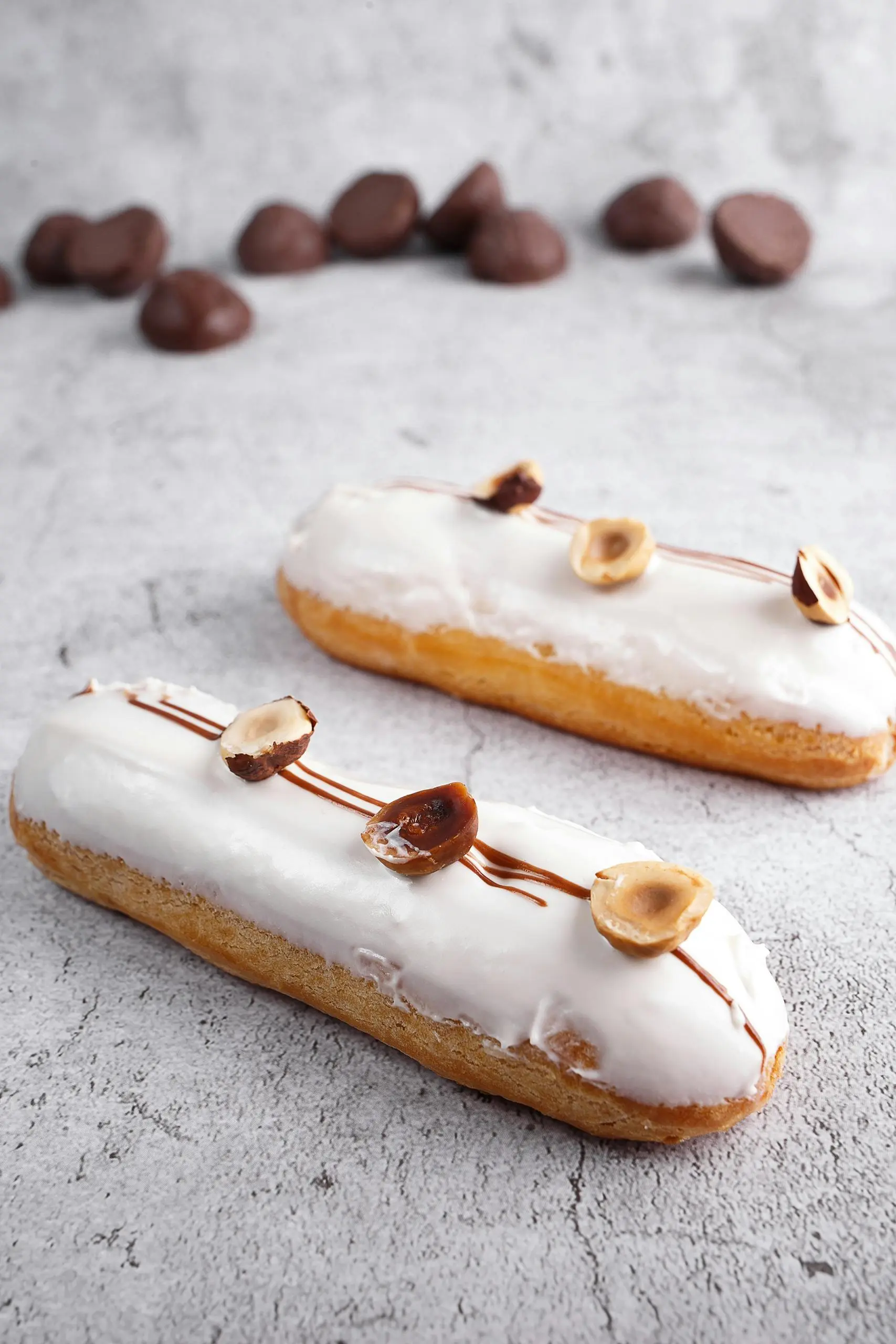
Vanilla beans from madagascar seem like a small detail—until you taste what they do in a silky cream.
Vanilla isn’t just “sweet.” It’s warm, creamy, softly floral, and somehow comforting at the same time. So if vanilla is going to show up in our pastry cream, chantilly, and custards, it has to be the real thing.
That’s why we’re choosing vanilla beans from madagascar at Éclairs Café—and why we’re skipping the low-cost shortcuts when vanilla is meant to be the star.
What makes Vanilla Beans from Madagascar so special?
Most of the world’s vanilla comes from the Vanilla planifolia orchid. However, not all vanilla tastes the same once it’s cured. Madagascar is famous for producing vanilla that feels balanced and familiar—rich without being heavy, and sweet without being flat.
In other words: it tastes like “vanilla” the way people hope vanilla tastes.
“Bourbon vanilla” doesn’t mean bourbon whiskey
You’ll often hear Madagascar vanilla called “Bourbon vanilla.” But that name is geographic, not boozy. It refers to the Indian Ocean region historically associated with this style of vanilla. So if you see “Bourbon,” think classic, creamy vanilla profile—not liquor.
The flavor you can actually taste
When we talk about vanilla beans from madagascar, we’re talking about vanilla that tends to be:
- Rich and creamy
- Softly buttery and rounded
- Gently floral (not perfumey)
- Deeply “classic vanilla” in the best way
And in French pastry, “classic” is a compliment. It’s the foundation that makes everything else taste more elegant.
Why real vanilla costs more (and why that matters)
Vanilla is one of the most labor-intensive flavors on earth. The pods are harvested by hand, then cured over time so the aroma can develop fully. Because that process is slow and precise, real vanilla is naturally premium.
Here’s the part people miss: real vanilla isn’t just one note.
Natural vanilla contains many aroma compounds, not only vanillin. So instead of tasting like a single “vanilla” hit, it tastes layered—warm, creamy, and lingering.
Low-cost vanilla: what it is (and what it isn’t)
Low-cost vanilla usually falls into two buckets.
1) Imitation vanilla (vanillin-based)
Imitation vanilla is typically built around vanillin—the main compound responsible for vanilla aroma. That said, vanillin alone can taste pleasant, especially in high-heat baking where delicate flavors fade anyway.
2) Lower-grade “vanilla” products
Some inexpensive extracts and flavorings may be more diluted or less aromatic. As a result, they read as “sweet vanilla” instead of “vanilla bean.”
So what’s the real difference? It’s not always dramatic in a cookie. But it’s huge in creams.
Where the difference shows up most: creams, custards, and fillings
Here’s the honest truth: in a baked cake, imitation vanilla can do the job. However, éclairs are a different situation.
Our fillings are cooked gently, or vanilla is added after cooking—when the aroma stays intact. So the depth of real vanilla doesn’t get baked away. It blooms.
With vanilla beans from madagascar in a pastry cream, you get:
- A fuller aroma (you smell it before you taste it)
- A longer finish (the flavor lingers)
- More dimension (not just sweet—warm and layered)
- The true “vanilla bean” experience, including those beautiful specks
And when vanilla is the main character, those details aren’t subtle. They’re the whole point.
Why we’re choosing vanilla beans from Madagascar at Éclairs Café
At Éclairs Café, we want vanilla to feel like a small luxury—refined, comforting, and quietly unforgettable. So we’re choosing vanilla beans from madagascar for our vanilla-forward desserts, especially where the flavor is front and center.
You’ll taste it in the places that matter most, like:
- Silky vanilla pastry cream in our éclairs
- Cloud-soft chantilly cream
- Custards and crème-style fillings where vanilla can truly shine
- Finishes and glazes that deserve more than “sweet vanilla”
Because an éclair should feel special. Not complicated—just carefully crafted.
How to buy, use, and store real vanilla beans from madagascar
If you’re shopping for vanilla beans from madagascar at home, here’s what to look for:
- Plump, flexible pods (not brittle or dry)
- A strong aroma even before you split the bean
- Moist, tiny seeds inside—those are the good specks
Then store beans in a cool, dark place in an airtight container. But don’t refrigerate them unless the packaging specifically recommends it, since humidity can cause issues.
Bonus tip: after scraping seeds, you can steep the pod in sugar to make vanilla sugar. So nothing goes to waste.
The simple value equation
Yes, vanilla beans from madagascar cost more. However, in the recipes where vanilla is meant to be noticed—pastry cream, chantilly, custards—the payoff is immediate.
Better ingredients create a better moment.
And if vanilla is supposed to taste like comfort and elegance at once, Madagascar vanilla is the standard we’re proud to use.
Éclairs Café is opening soon—and we can’t wait to share what we’re building (and baking). Follow us on Instagram to see menu previews, behind-the-scenes pastry shots, and our first pop-up dates: @EclairsCafe.