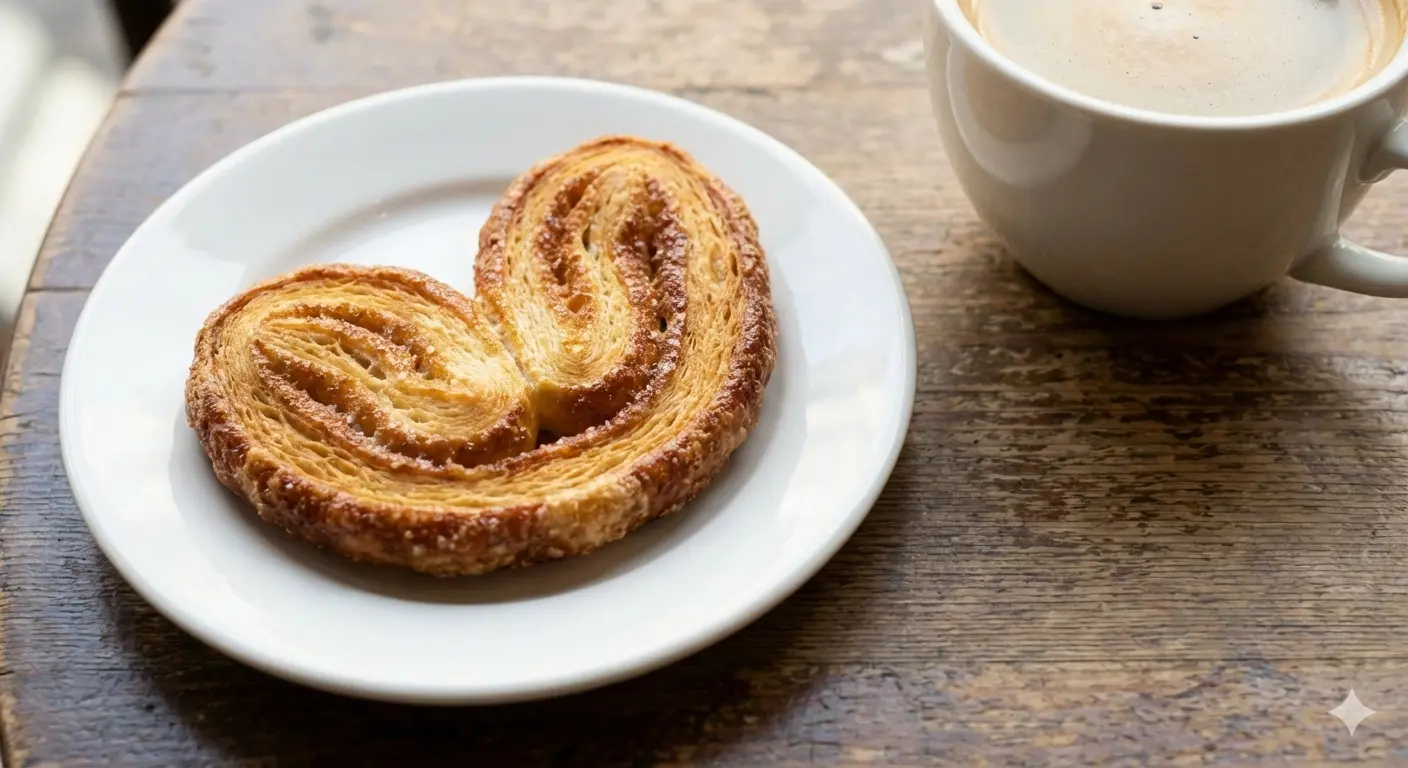
A good puff pastry recipe is the secret to many classic French pastries. With just a few simple ingredients, you can create a light, flaky dough that turns every bite into a small moment of elegance. In this Puff Pastry Recipe, we show you how to make pâte feuilletée at home and how to turn it into beautiful sweet and savory creations.
Because the process is slow and mindful, it also becomes a gentle ritual in your day. You roll, fold, and rest the dough. Then you watch it rise into golden layers in the oven. Each step moves you closer to that first crisp, buttery bite.
Why this Puff Pastry Recipe is worth your time
Puff pastry is one of the great classics of French baking. It looks impressive, yet it starts from just four ingredients. With a little patience, you can create your own pâte feuilletée maison and enjoy:
- A delicate, flaky texture with many thin layers
- A versatile base for both sweet and savory recipes
- A memorable taste of French elegance at home
Because this dough keeps well in the fridge or freezer, you can prepare it in advance. Then you are always just one step away from a freshly baked treat.
Puff Pastry Recipe overview
For about 500 g of puff pastry (enough for 1 large tart or several small pastries):
- Preparation time: about 1 hour (spread over several steps)
- Resting time: about 2 hours total
- Difficulty: Medium
This Puff Pastry Recipe is not difficult, but it does ask for care and calm. As a result, it rewards you with a beautiful, flaky pâte feuilletée.
Puff Pastry Recipe Ingredients
- 200 g flour (all-purpose or T55)
- 150 g unsalted butter, cold but flexible
- 100 ml cold water (about 1 small glass)
- 1 teaspoon fine salt
Plus:
- A little extra flour for dusting the work surface, if needed
Because the ingredients are so simple, their quality matters. Choose fresh butter and good flour for the best flavor.
Step 1 – Prepare the dough (détrempe)
This is the simple base that will wrap the butter.
- First, dissolve the salt in the cold water in a small bowl.
- Place the flour in a large bowl and make a small well in the center.
- Pour in the salted water little by little, mixing with your hand or a spatula.
- Then bring the dough together and knead briefly, just until it forms a rough, slightly firm ball.
- The dough should not be sticky, but it should not be too dry either.
- Shape into a ball, cover with a clean cloth or wrap, and let rest at room temperature for 15–20 minutes.
During this short pause, the dough relaxes and becomes easier to roll. It is also a small invitation for you to slow down for a moment as well.
Step 2 – Prepare the butter
We want the butter soft enough to roll, but still cool and not melted.
- Cut the butter into small cubes and place them in a bowl.
- With a fork or spatula, press and smooth the butter until it becomes malleable and creamy.
- Shape it into a flat rectangle, about 1–1.5 cm thick.
- If it becomes too soft, place it in the fridge for a few minutes.
The dough and butter should be at a similar firmness. Because this balance is key, it helps you create beautiful, even layers later.
Step 3 – Enclose the butter
- Lightly flour your work surface.
- Place the dough in front of you and roll it into a large rectangle, leaving the center slightly thicker than the edges.
- Place the butter rectangle in the center of the dough.
- Then fold the edges of the dough over the butter, like an envelope, so the butter is fully enclosed.
- Seal the edges with your fingers so the butter cannot escape when rolling.
You now have a neat package of dough and butter. This is the heart of your puff pastry.
Step 4 – First “turn” (folding)
A “turn” is what creates the famous layers of puff pastry.
- With your rolling pin, gently roll the dough into a long rectangle, always in the same direction.
- If the butter starts to show, lightly dust with flour.
- When you have a long rectangle, fold it in three, like a letter:
- Fold the left third toward the center.
- Then fold the right third over the first fold.
- Turn the folded dough 90° (a quarter turn), so the folds are now on the sides.
You have just completed your first turn. Already, the layers of your Puff Pastry Recipe are beginning to form.
Step 5 – More turns and resting time
You will now repeat the rolling and folding to build up the layers.
- Roll the dough again into a long rectangle.
- Fold it in three the same way (letter fold).
- This is your second turn.
- Wrap the dough and place it in the fridge for 20–30 minutes to rest.
Then:
- Take the dough out and place it in front of you with the folds on the sides.
- Repeat the process: roll into a rectangle, fold in three, give a quarter turn, roll again, and fold in three.
- You now have four turns. Wrap the dough and rest again for 20–30 minutes in the fridge.
Finally:
- Repeat one last series of two turns (roll, fold in three, quarter turn, roll, fold in three).
- At the end, you will have 6 turns in total.
Your puff pastry is now ready to use. Or, if you prefer, you can chill it until needed and bake later for a fresh moment of French elegance.
Step 6 – Using your puff pastry
Before shaping:
- Let the dough rest in the fridge for at least 30 minutes.
- Work with quick, confident movements so the butter stays cool.
You can now:
- Roll it out for sweet or savory tarts
- Cut into rectangles for mille-feuille
- Use rings or cutters for individual puffs, vol-au-vent, or small snacks for apéritif
Each bake gives you a light, crisp base that feels like a small, elegant escape. Because the dough is so versatile, one Puff Pastry Recipe can become many different treats.
Puff Pastry Recipe Tips for a beautifully flaky result
A few simple habits make a big difference.
Keep everything cold
- Chill the dough each time it becomes too soft.
- Cold butter is what makes the layers puff and stay distinct.
Therefore, never rush this step. The resting time is part of the recipe.
Handle gently
- Avoid overworking the dough.
- Too much handling can make the pastry tough and reduce the rise.
So, roll with calm, even movements and resist the urge to keep kneading.
Bake at a high temperature
- Bake puff pastry in a hot oven: around 200–220°C / 390–430°F.
- The strong heat helps the layers lift and become crisp.
If your oven has hot spots, turn the tray halfway through baking for even color.
Protect it from moisture
If your filling is very moist:
- Prebake the pastry (“bake blind”) for a few minutes.
- Or brush the surface with a little beaten egg white.
- Or sprinkle a thin layer of ground almonds, semolina, or breadcrumbs to absorb excess moisture.
These small steps help keep your pastry golden and crisp. As a result, each bite stays light instead of soggy.
Classic French pastries made with puff pastry
Once your pâte feuilletée is ready, you can turn it into many classic French pastries made with puff pastry. Here are some ideas to inspire your next moment of elegance.
Sweet classics
- Mille-feuille
Thin layers of puff pastry with smooth pastry cream, often finished with a simple glaze. It is a true symbol of French pastry. - Chausson aux pommes
A half-moon pastry filled with tender, lightly sweet apple compote. It is perfect with an afternoon coffee. - Galette des Rois
A round puff pastry tart filled with almond cream (frangipane), traditionally enjoyed in January to celebrate Epiphany. - Tarte fine aux pommes
A very thin base of puff pastry topped with finely sliced apples, baked until golden and crisp. - Palmiers
Delicate, caramelized puff pastry cookies, rolled in sugar and baked until beautifully crisp. - Pithiviers
A round, domed puff pastry dessert filled with rich almond cream, with a pretty pattern scored on top.
Because all of these use the same dough, one Puff Pastry Recipe can become many different desserts.
Savory favorites
- Vol-au-vent
Small puff pastry cases that you can fill with creamy chicken, mushrooms, seafood, or vegetables. - Bouchées à la reine
A slightly smaller, elegant version of vol-au-vent, perfect as a starter or for a festive buffet. - Feuilletés apéritifs
Small puff pastry bites filled with cheese, ham, smoked salmon, or vegetables—ideal for sharing at apéritif time.
With one batch of puff pastry, you open the door to many simple, elegant creations. Each one is a small, memorable taste of French savoir-faire.
Your own little French ritual
This Puff Pastry Recipe is more than a set of steps. It is a way to bring a quiet, refined pleasure into your day. You roll the dough, fold the layers, and listen to the gentle sound of the pastry puffing in the oven.
Serve your pastries with a carefully chosen coffee or tea. Share them with someone you love, or simply enjoy them in a calm moment just for you. Each bite is a gentle reminder that everyday life can hold a touch of French elegance.
Coming soon: Eclairs Cafe
If you enjoyed this Puff Pastry Recipe and these classic French pastries made with puff pastry, you will love what is coming next. Eclairs Cafe is opening soon, and we cannot wait to share more moments of elegance and satisfaction with you.
In the meantime, follow us on Instagram to:
- Discover our latest creations
- See behind-the-scenes glimpses of our pastry craft
- Save ideas for your next perfect little break
Follow @EclairsCafe on Instagram and join us as we bring a little French elegance closer to you, one pastry at a time.